
Why Decisions in District Heating Need Data
We are living in uncertain times in the energy sector. Old technologies are being phased out due to pollution, scarcity, and sustainability concerns. District heating in Finland has traditionally relied on combustion-based CHP production, but with the final coal-fired production facility shutting down in spring 2025, it is clear that there is a pressing need for replacement technologies. Not just in Finland, but all across Europe.
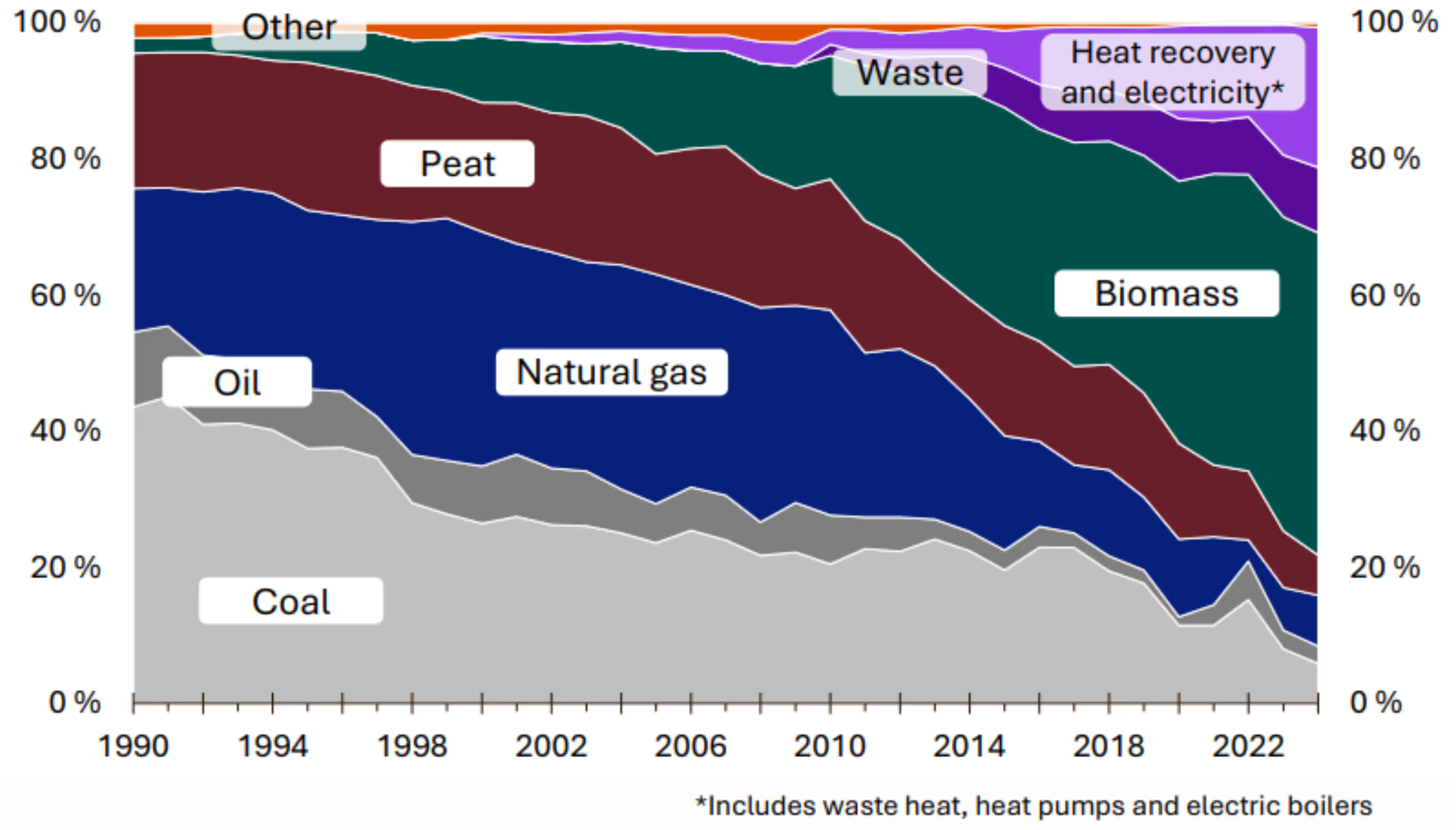
Choosing the path to move forward is not simple. Biomass-based combustion may look like the easiest transition path, but it does come with some challenges: while the fuel may be local and renewable, it does not change the fact that CO2 still comes out of the chimney. Concerns about availability, land use, and sustainability are growing, and many energy companies are realizing that burning wood to heat cities may soon be a thing of the past.
Electrification, through electric boilers and heat pumps, is another option that could replace aging infrastructure. While promising in some cases, this places additional strain on the electric grid and involves converting high-value electricity into lower-value heat. Large-scale battery investments would be needed to manage intermittency of electricity production, adding complexity and cost.
A third option, and the one we at Steady Energy are working on, is reliable and carbon-free nuclear heat from our LDR-50 Small Modular Reactor (SMR). However, since this technology has not yet been used for district heating in the Western hemisphere, it naturally raises many questions. Although there have been cases where nuclear plants supplied district heating, these remain rare due to regulatory hurdles and the remote siting of most plants, even though nearly 60% of the energy produced by conventional reactors is lost as excess heat in the conversion process to electricity.
This leads to the essential questions: How does the LDR-50 work in practice? How much heat can it provide, and at what temperature? How will it fit into existing networks? What are the risks, costs and benefits?
These are not questions that can be answered by opinion or assumption. They require structured analysis. And that’s exactly what a feasibility study is designed to deliver.
What Is a Feasibility Study?
A feasibility study is a structured, professional evaluation of whether a proposed solution is technically, economically, and socially viable. In our case, it’s about answering one clear question:
Is the LDR-50 suitable for your district heating network?
That simple question hides a wide range of sub-questions:
- How well does the technology integrate with your existing system?
- What are the capital and operational costs, and how do they compare to alternatives?
- How resilient is the project to changes in fuel prices, carbon costs, or regulations?
- What CO2 reductions can be achieved, and how will this be received locally?
A feasibility study doesn’t just produce a generic report. It is tailored to your city, your network, and your future plans. It blends technical simulations, market assessments, financial modelling, and risk analysis to provide a clear picture of what is possible, and what isn’t.
The biggest benefit? A feasibility study gives you the confidence to move forward (or not) with full visibility of the risks, opportunities, and trade-offs involved.
What You Get from a Feasibility Study
Feasibility studies aim to give you clarity. In our studies, we simulate your district heating network, compare scenarios, and test how our LDR-50 would perform in practice.
Key deliverables:
- Technical analysis – How the LDR-50 integrates with your existing network.
- Economic assessment – Capital and operating costs, LCOH, and lifecycle emissions.
- Risk evaluation – Identification and mitigation of technical, financial, and regulatory risks.
- Environmental & social impact – CO₂ savings, local acceptance, sustainability compliance.
- Strategic insights – How adopting LDR-50 positions you as a pioneer in clean district heating.
How We Work
To provide these results, we follow a clear and transparent process:
- Data gathering – We collect public and customer-provided data about your network and its demand profile.
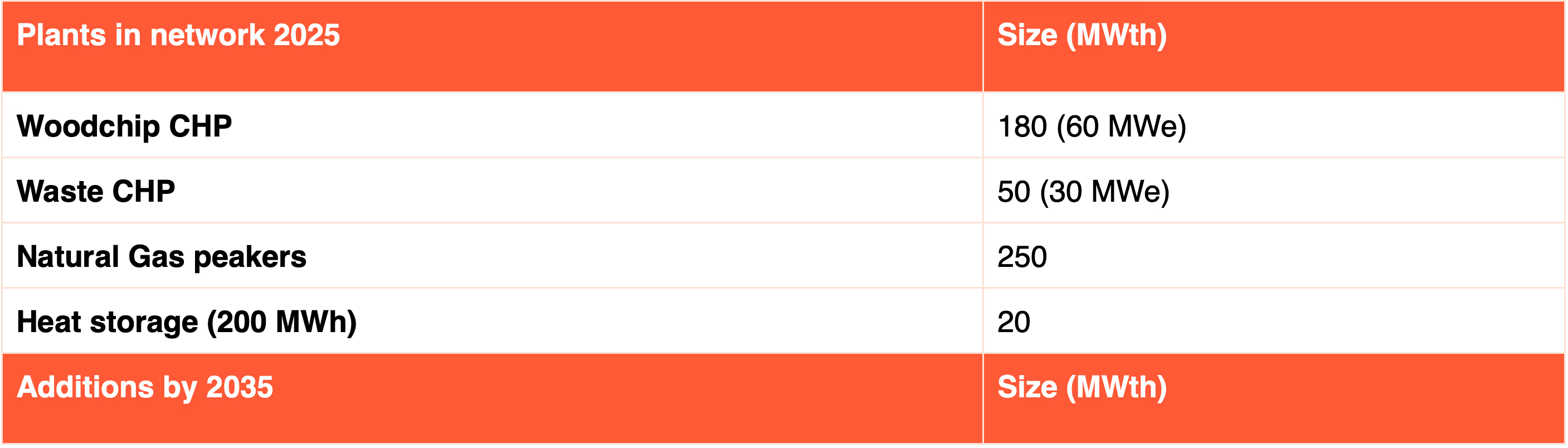
- Simulation – We model the network, testing how it behaves today and how it might evolve in the future.
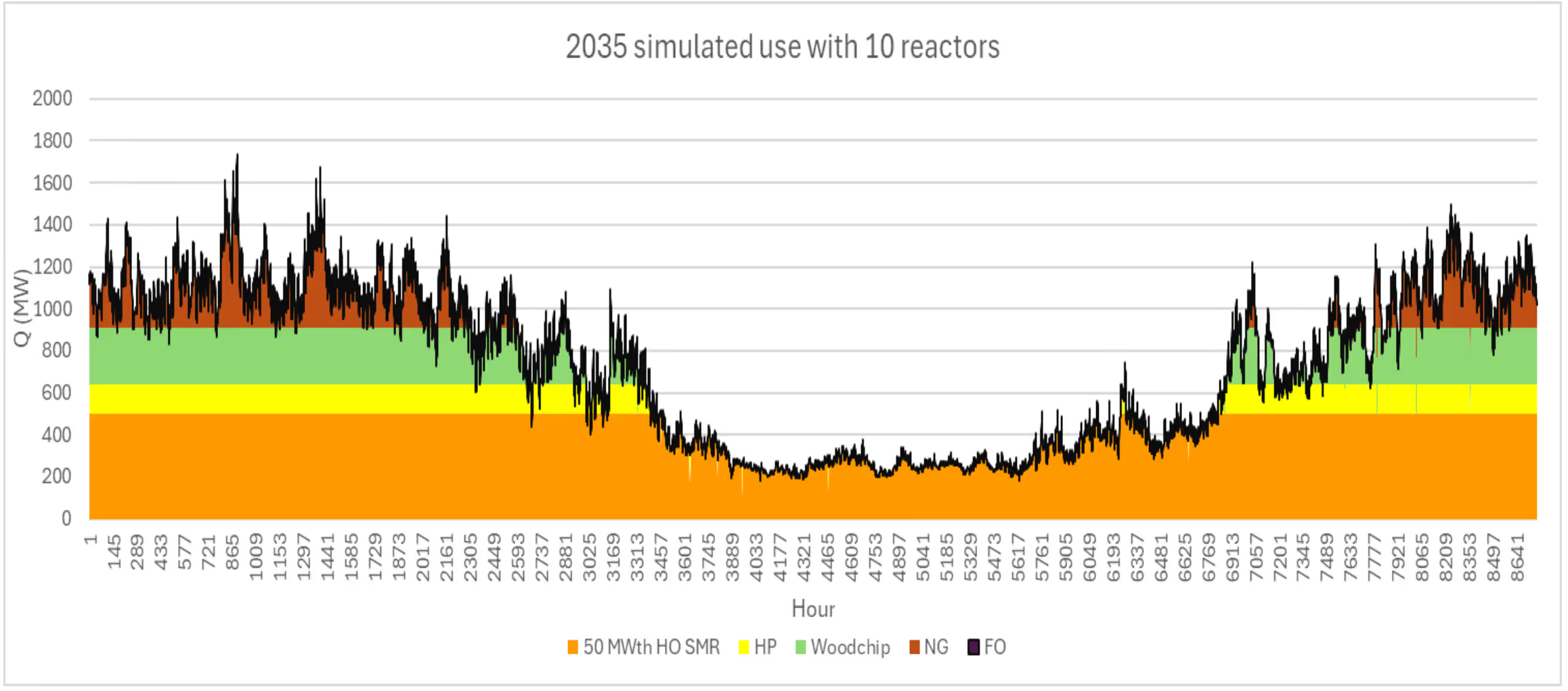
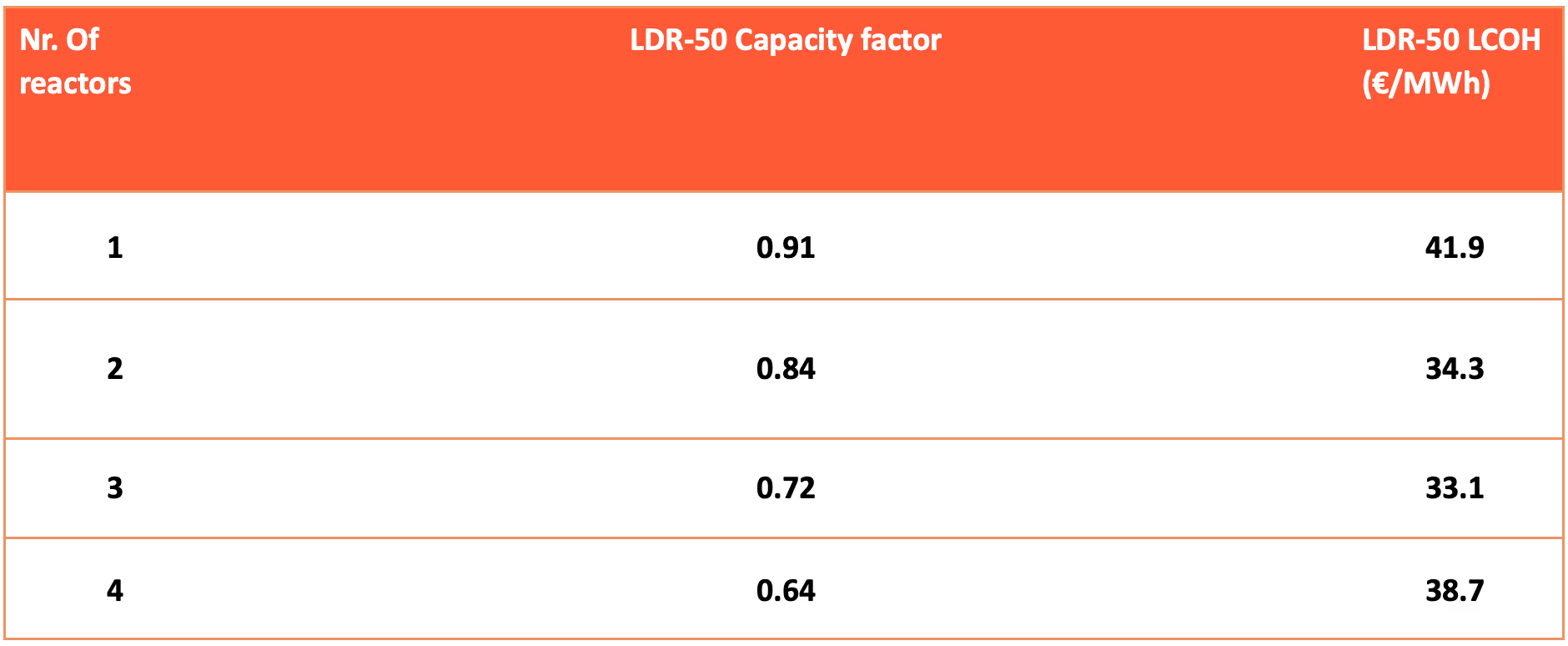
Scenarios – We add one, two, three, or more reactors to the model, comparing results against other technologies.
- Analysis – We assess technical integration, economic viability, environmental impact, and risks.
- Delivery – We present a clear, data-backed answer: is the LDR-50 a good fit, or not?
It’s not about overselling. If the fit isn’t there, we’ll say so. Being realistic builds trust, and trust is the foundation of long-term partnerships.
How It Helps Your Decision-Making Process
District heating investments are high-stakes, long-term decisions. Once infrastructure is built, it will define a city’s energy system for decades. A feasibility study helps decision-makers by:
- Translating complex technical details into actionable insights for boards and councils.
- Providing a clear roadmap from initial interest to investment readiness.
- Reducing uncertainty and justifying investments to owners, regulators, and municipalities.
- Ensuring alignment with long-term strategies and climate goals.
Whether you are considering a boiler upgrade, a new heat pump, or a pioneering SMR project, all successful projects start with a feasibility study. The bigger and more novel the project, the more valuable the study becomes.
Numbers on a spreadsheet don’t make decisions by themselves. But when structured into a well-designed feasibility study, numbers turn into confidence for decision-making across technical, financial, environmental, and social dimensions.
Why Apply for a Feasibility Study Early?
Timing matters. By starting a feasibility study early, you:
- Secure first-mover advantages and potential partnerships.
- Have more time to plan financing and stakeholder communication.
- Increase credibility with municipalities, regulators, and end-customers.
- Make a modest investment compared to the overall project cost, but one that can save millions later.
In short: the sooner you test the idea, the better you can shape your strategy.
How the Process Works
Here’s how we typically run a feasibility study:
- Application – You reach out and we hold an initial consultation.
- Data gathering – We collect information about your network’s size, demand, and existing plants, either from publicly available sources, or from data provided by you, the customer.
- Modelling & analysis – We simulate different scenarios, test sensitivities, and estimate 10–20 years into the future.
- Results – We present technical, economic, and environmental insights.
- Decision support – You receive a clear report and presentation to guide boardroom discussions.
The process is iterative: as trust grows, data sharing improves, and the models get sharper. The result is a realistic picture of how an SMR could fit into your heating system.
Building With Confidence
Selling a technology that doesn’t yet exist in practice is challenging. But with the right feasibility studies, we don’t have to rely on hype, we can rely on data.
As someone who has spent some time now modelling district heating systems, I’ve seen both the ups and downs of this process. Sometimes the fit is excellent, sometimes it’s not. But in every case, a feasibility study helps clarify the path forward, reduce risk, and strengthen trust.
Ready to Explore?
If your city or company is considering the future of district heating, now is the time to start. Apply for a feasibility study, and together we can explore whether the LDR-50 is the right fit for your network.
Decide with data. Build with confidence.